
Skin Wellness Tips for Summer and Beyond
There’s no better way to fully embrace summer than being outside soaking up the sun. However, while enjoying the outdoors, it can be easy to forget that you also need to protect your skin from the sun’s rays. Although this sounds like an easy task, it can be hard to discern the best way to go about it. Let’s dive into what the experts say about how to best take care of your skin while enjoying the sunshine.
The sun gives off two different kinds of UV rays: UVA and UVB. UVA rays are often referred to as “aging rays” as they are known to damage important proteins in the skin, such as collagen and elastin, which can lead to premature wrinkles and sagging. UVB rays are known as “burning rays” because they damage the DNA in the top layer of skin, which is how you get sunburns.

How to Protect Your Skin and Enjoy the Outdoors
Sunscreen is a great way to protect your skin and enjoy the sunshine. However, there are so many options, how do you know what’s the best choice? The biggest variation between sunscreens is whether it is of chemical or mineral composition.
Mineral sunscreens are often of thicker consistency, and can offer different tints to blend in with skin tones. Chemical sunscreens are lighter weight and absorb more easily into the skin, so they don’t run the risk of leaving a whitecast.
There is a lot of back and forth on which of these options is better; however, they both work well to protect the skin from the sun’s UV rays, and the best choice depends on personal preference for application.
We’ve all heard of SPF (Sun Protection Factor), but what does it—and the number—really mean?
The higher the SPF number the more protection the sunscreen offers from UVB rays. However, no sunscreen offers 100% protection.
Megan Willliams, Licensed Aesthetician and owner of Kalon Skin and Wellness even refers to the SPF number as being a bit misleading, as SPF 15 offers about 93% protection, SPF 30 offers about 97%, SPF 50 offers about 98%, and SPF 100 offers about 99%.
So although the higher the SPF number means higher protection, the SPF number does not directly correlate with the percentage of protection. SPF is important in sunscreen, but there is another important layer to your skin protection.
“UVA rays are responsible for the aging effects you see in skin after chronic exposure,” Williams says. “This happens very slowly over many, many years. They are also responsible for increasing skin cancer risk.”
UVA rays use a different rating system, known as the PA system. However, this is not as frequently used in the U.S., so you want to look for Broad Spectrum on your sunscreen to know that it is protecting you from both UVB and UVA rays. If you do find a sunscreen that utilizes the PA system, the number of plus signs following the PA refer to the strength of the rating. For example, PA+ versus PA+++.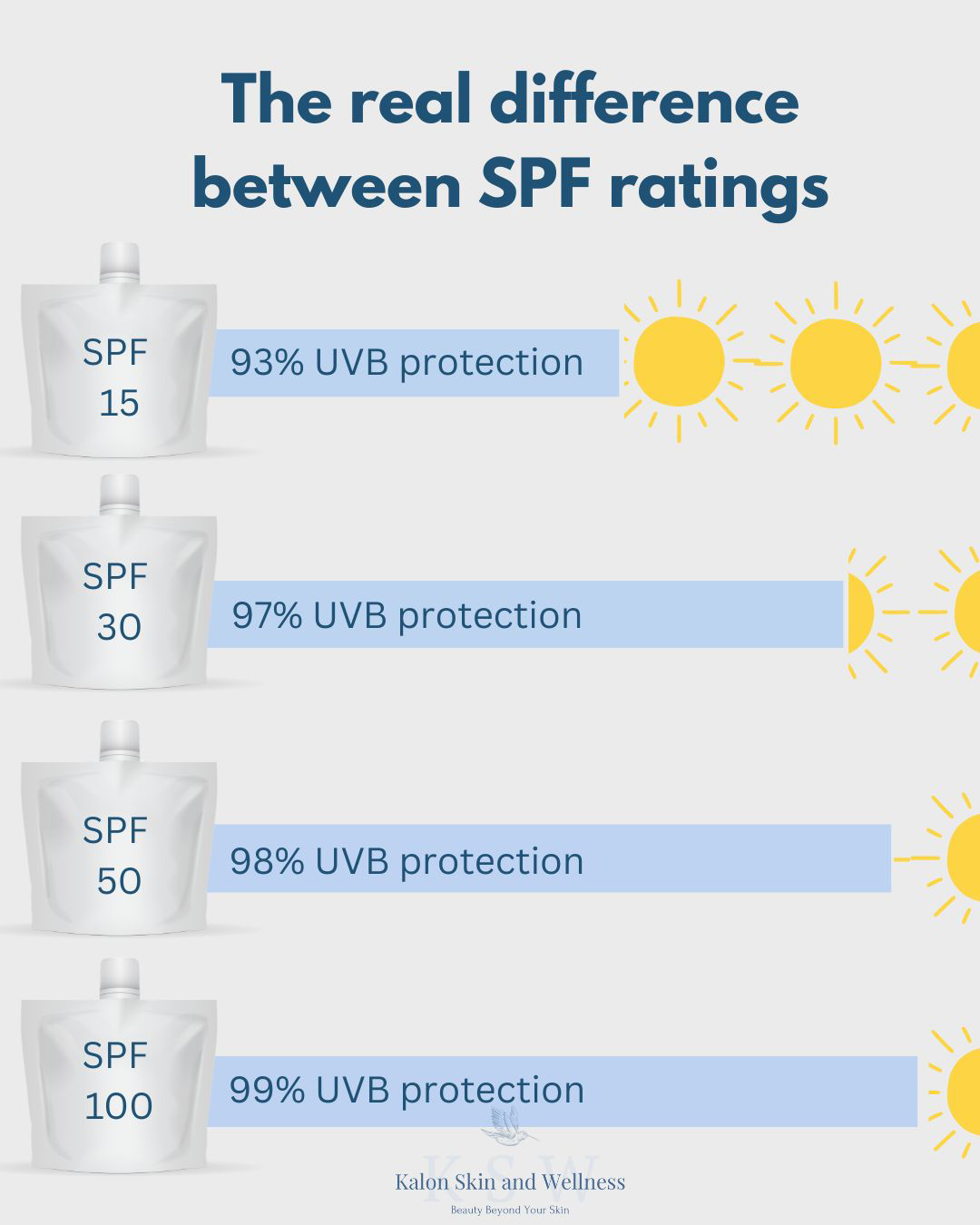
“In short, a broad spectrum sunscreen with an SPF of at least 30 is generally what’s recommended,” Williams advises.
Once you find a sunscreen that works best for you, how often should you reapply it? Williams says that the general rule of thumb is to reapply every two hours. Things such as swimming and sweating can reduce the time between reapplication. It will also depend greatly on whether or not your chosen sunscreen product is water resistant. Reapplication time for these scenarios should be outlined on the sunscreen’s label.
There are many products and accessories available that help to prevent sunburn. For example, UPF clothing, accessories such as hats and sunglasses, even some daily makeup and skincare products now offer SPF protection. These are all helpful products in preventing sunburn, but they should not be used in place of sunscreen.
“All of these are wonderful additions,” Williams shares. “But I wouldn’t consider them to be substitutes for sunscreen.”
Unprotected Sun Exposure: The Risks and What to Avoid
For many of us, our primary thought regarding sun safety is preventing sunburn. However, there is a much larger threat. Sun damage is cumulative, and any unprotected sun exposure to the skin causes cell damage, and increases the risk of skin cancer.
“Your 10-minute walk without sunscreen every day adds up over time,” Williams warns. “Even though you’re not burning, you are still getting cell damage, increasing your risk for skin cancer.”
The sun also accounts for up to 80-90% of visible skin aging.
“Wearing sunscreen is my number one anti-aging skincare recommendation,” Williams shares. “So while sunburn is important to avoid, that’s not the only reason to stay protected.”
 Williams also addresses a large myth.
“It’s a common misconception that people with darker skin tones don’t need to wear sunscreen but this is so far from the truth,” she says. “Skin cancer goes undiagnosed much longer in people of black and hispanic backgrounds making it much more deadly.”
Melanin is a natural protection against the sun, but even the most melanated skin only has the protection equivalent to SPF 15, and the minimum recommendation is SPF 30 with broad spectrum. So regardless of your skin tone, it’s important that you utilize products that protect your skin from the sun’s rays to lower the risk of sun damage and skin cancer.
Although sunscreen is a great way to protect from sunburn and sun damage, it is not a failsafe. The sun is quite persistent, especially in the summer months, so what is the best way to deal with a sunburn if it does occur?
If you’re looking to treat from home, it’s best to keep things simple.
“Ingredients like aloe vera, cica, and beta glucan are all very gentle, calming and hydrating,” Williams explains. “You’ll want to avoid any active ingredients on compromised skin, so any retinoids, benzoyl peroxide, exfoliating acids or scrubs, and things like Vitamin C. These ingredients can be great later on, but when skin is healing, we need to keep things simple and gentle.”
Your primary focus while healing a sunburn should be soothing the skin and keeping it hydrated.
Not all sunburns should be treated from home, and it’s important to know when to seek medical attention.
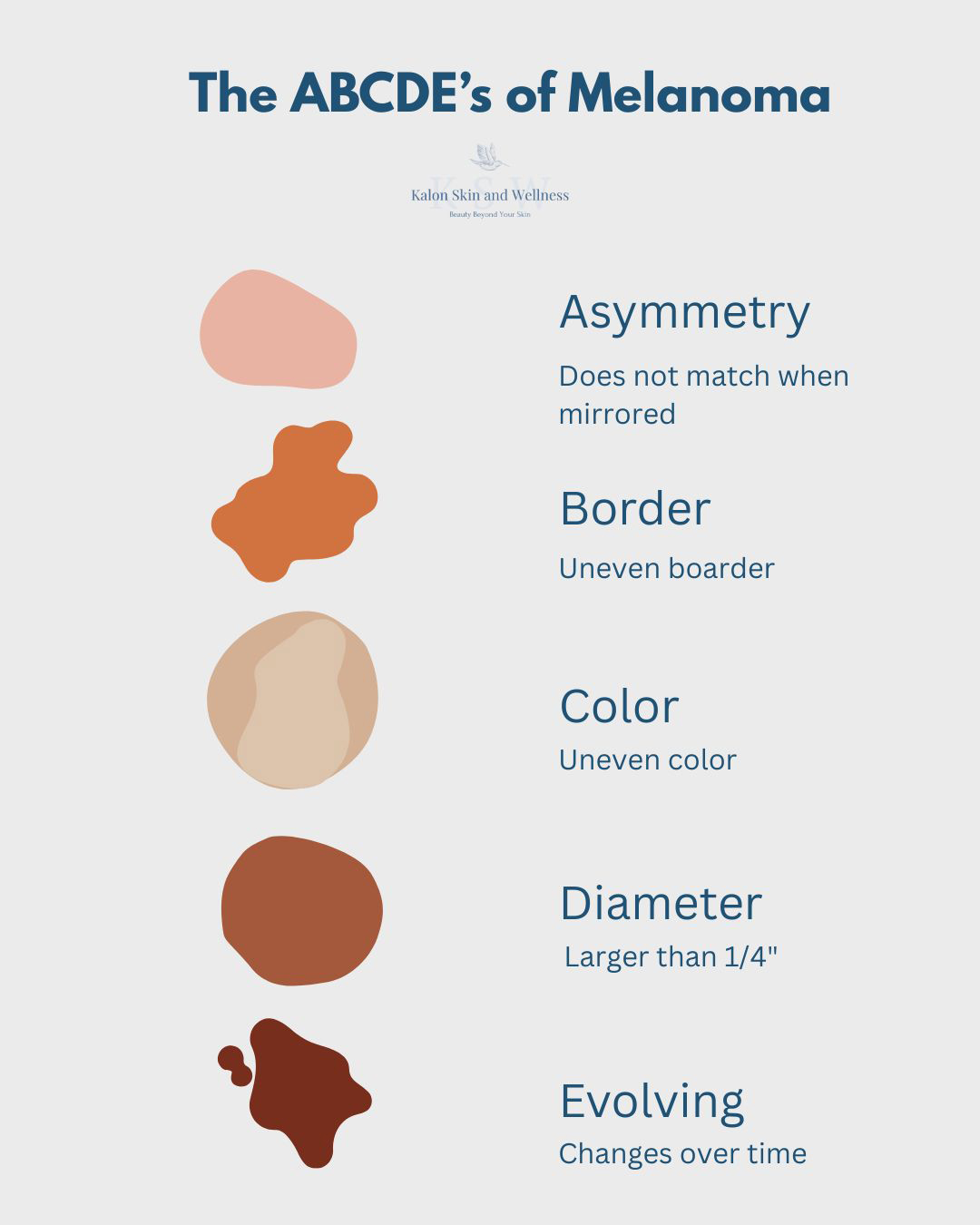
If the sunburn is blistering, swelling or showing other odd symptoms it’s time to get checked by a doctor. Williams recommends becoming familiar with symptoms and signs of skin cancers, such as developing or changing sun spots and moles, especially the ABCDEs of melanoma. If you know what to look for you are better prepared to make a decision on when to seek medical help.
There are a few things that can be done to help sun damage in the field of aesthetics as well. The majority of concerns aestheticians see are a result from cumulative sun damage, such as wrinkles, hyper pigmentation, fine lines and uneven skin tone.
“Things like chemical peels, microneedling and a solid home care routine that focuses on hydration, antioxidants, peptides and tyrosinase inhibitors all help to address these concerns,” Williams says.
Now that you have the tools and information in your pocket to keep your skin safe in the sun, get out and enjoy the rest of the summer!