
Local Professionals Shed Light on What’s Best in the Fox Valley
As a homeowner, fencing can provide a sense of physical and psychological security, and it can also help build a sanctuary for respite in our own backyards. Whether you need to keep man’s best friend from wandering throughout the neighborhood, you want to create a safe space for your children to play, or you’re simply adding another level of security to the perimeter of your property, fencing comes in a variety of materials and designs to meet your chosen aesthetic.
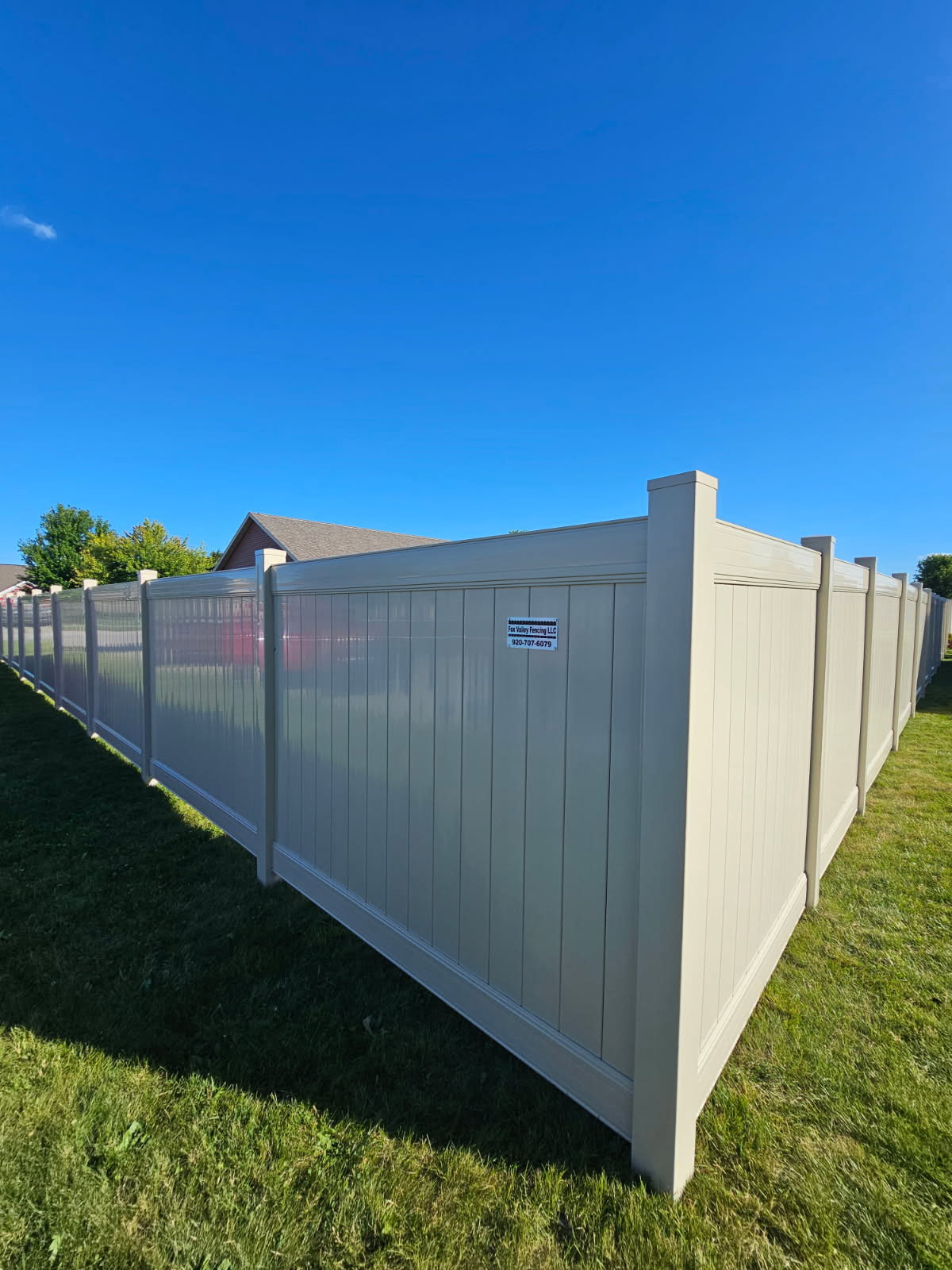
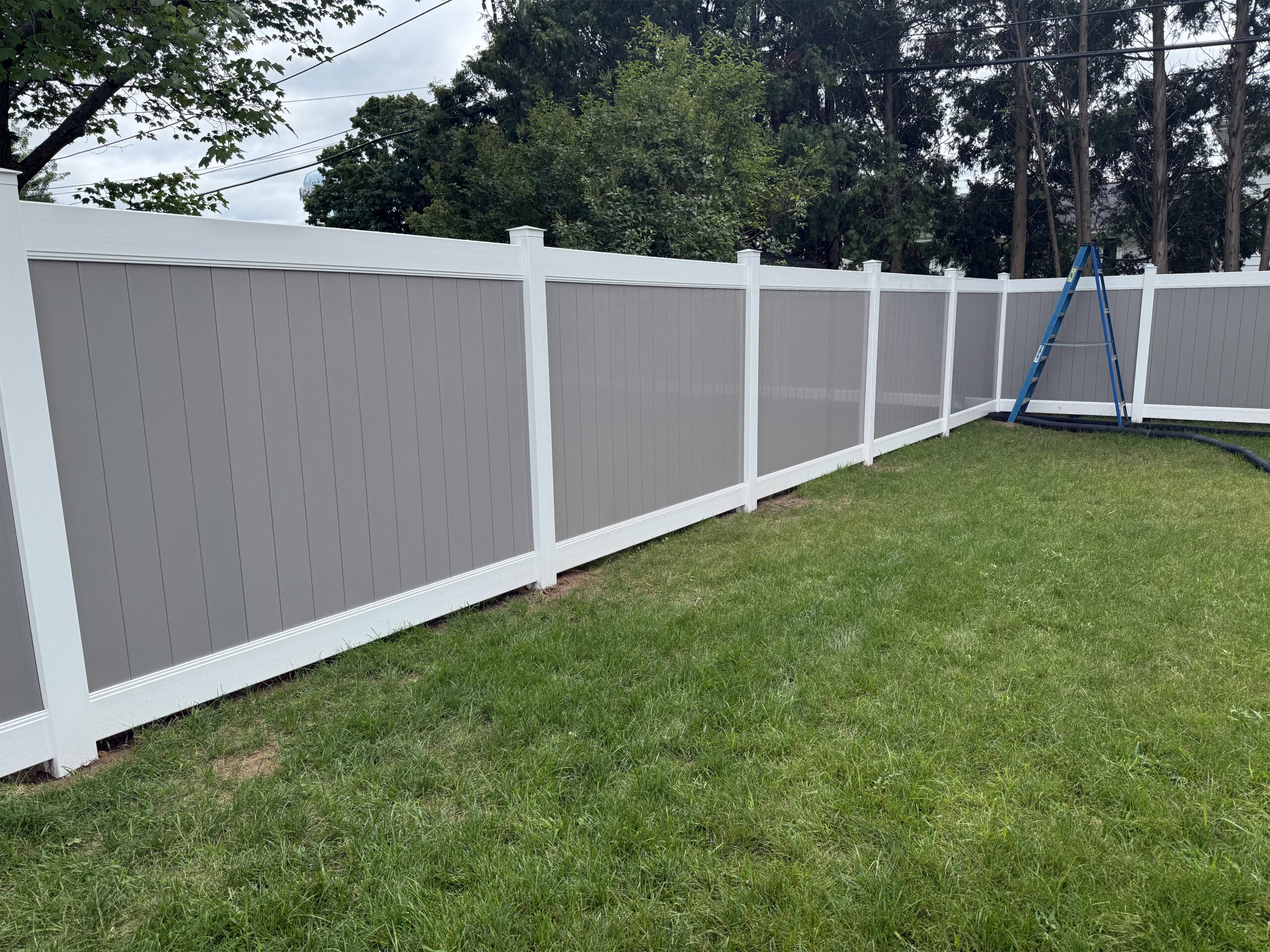
Jim Marks, co-owner of Valley Custom Fence in Appleton, said that over time, the most popular material chosen for fence installs has been polyvinyl.
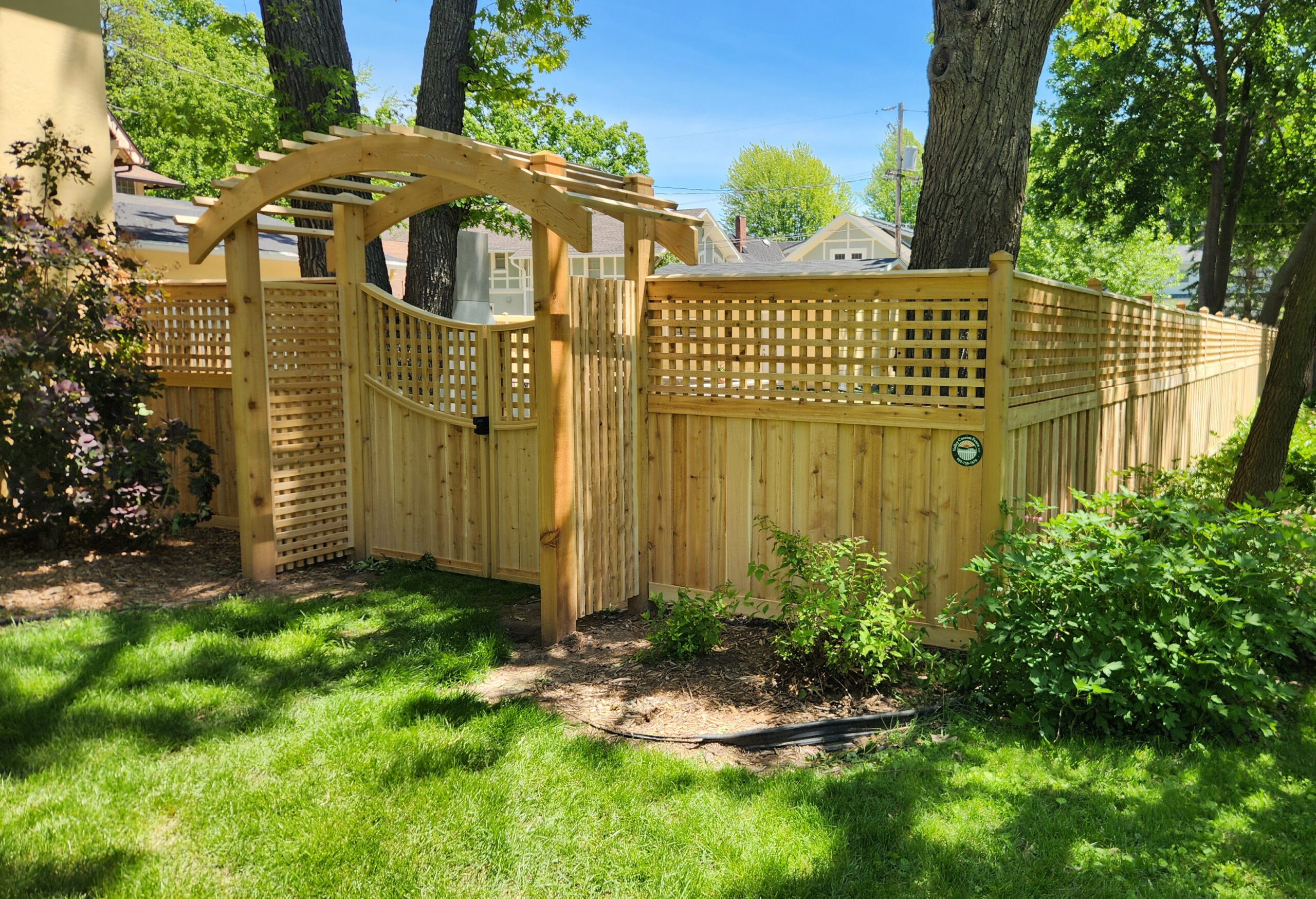
“Wood is a close second,” he says. “Wood used to be first place; it kind of goes back and forth. This last year was a little bit even steven, so to speak, for the two, but in the end the polyvinyl white fence kind of takes over.”
Ashley Jared, owner and office manager of Fox Valley Fencing in Appleton, says she and her husband Josh have seen an uptick in the popularity of wood-grain style fencing for their customers.
“This is a vinyl material, but it is given a wood grain-like appearance that is really eye-catching and unique,” she explains.
For their customers, the most popular fencing option among residential homeowners is 6-foot-tall white vinyl privacy fencing.
“It is low maintenance, strong and fully private,” she says. “You can also get vinyl fencing in a multitude of color options, as well as semi-private and picket style. Homeowners love the variety of fencing options they have with vinyl.”
At Whirlwind Post Holes and Fencing in Appleton, owner Jeffery Borree says vinyl is also the most popular option for his customers, who prefer it for its low maintenance properties, but wood is also frequently chosen for residential use.
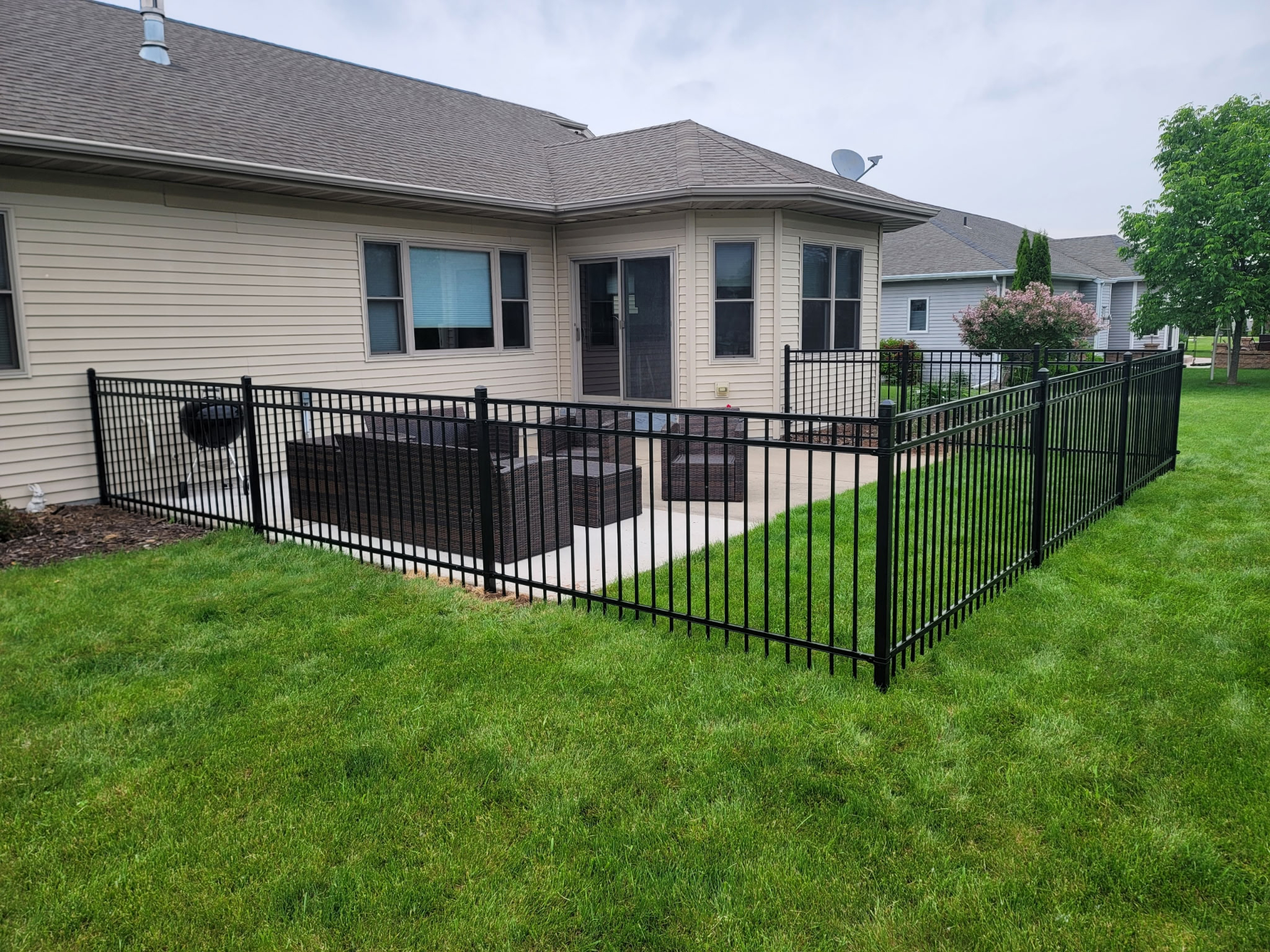
“We also [install] a good share of wood fence in the privacy [space] because it’s more more economical than the vinyl,” he says. “If people are just looking for containment, then either a black or bronze ornamental fence or a black-coated chain link has been popular in that area.
“They’re not any less costly than some of the other styles, but they’re a little more open, where you can see your neighbors.
Choosing Materials for a Solid Investment
Obviously, with Wisconsin’s seasonal climate, fencing can take a beating under the effects of ice, snow and frost in the colder months, blazing temperatures and the harsh effects of sunlight in the summer, and moisture year-round.
Jared explains that in their team’s experience, chain-link fencing seems to hold up the best in Wisconsin winters, followed by steel ornamental fencing.
“Cedar fencing requires an application of a clear coat weather sealant every three years to maintain its quality,” she adds. “Many homeowners do not mind applying the sealant because cedar is so beautiful and gives a rustic appeal. Vinyl is very low maintenance. A little power wash here and there and it is as good as new.
“Our wood and vinyl fences are installed with 10-foot steel posts that are pounded 4 to 5 feet into the ground, below the frost line, for increased stability.”
Marks adds that early on, polyvinyl options were too thin and took a real beating from the weather. Now, however, materials used in fencing are stronger.
“The polyvinyl is much better than all of [the choices],” he says. “Still, in Wisconsin, you want to get the posts nice and deep, because when frost comes, it starts trying to heave the post. Ultimately, mother nature always wins. It’s the climate we live in. But, if you go four feet in the ground with posts, you’re going to win most of the time. So that’s huge—and that doesn’t matter whether it’s polyvinyl, wood, chain link, whatever, [we] try to go deeper with the posts to stabilize the fence.”
Borree agrees. He says that while most materials work in our climate, frost can be the enemy and it’s crucial the installation of the fence is done correctly.
“You need to install it so it’s frost protected,” he says. “…Frost is always going to win, no matter what you do, but we try and beat it as best as possible. By installing it properly, you’re going to have very [few] issues.”
“People spend a lot of money on these things,” Marks adds. “So why not do something to make it last?”
Ensuring you Find the Right Fit in a Fence Company
There are several considerations to make prior to having fencing installed. At Fox Valley Fencing, they always recommend the homeowner have a yard or land survey prior to the install. The homeowner is responsible for the cost of this service, and it is typically around $1,000.
“Homeowners [who] have an HOA should always be mindful of their specific fence guidelines because every HOA is different,” Jared says. “At Fox Valley Fencing, we take care of the building permit with the city [or] town, and we also contact Digger’s Hotline (811) prior to every installation. Some fencing projects are too close to underground utilities, [so] to safely dig in these areas, we use a machine called a hydrovac (high pressure water) to dig safely.”
According to Borree, when a new customer calls Whirlwind, they first will use global positioning satellite imagery to come to a ballpark estimate for the customer’s space they want fenced in.
They then set up an appointment to do in-person measurements and to explore if there are any easements, drainage issues, setbacks from the road, etc. that need to be factored into the project or may prevent them from installing the fence.
Depending on what the fence is for, whether it be for keeping pets and kids safe, or for more privacy, Marks says knowing how the homeowner intends to use it helps narrow down the parameters for the height and structure of the fence. And while those sometimes-pesky HOA rules and guidelines have been known to stop a home improvement project in its tracks—and can certainly change the scope of the fencing you decide to put in your yard —even the height at which your dog is able to jump can be something that needs to be taken into consideration from the get-go.
As a result, the checklist for a successful fence build can be long, including not just the aesthetic preferences of the homeowner, but also the actual structural design of the fence, the rules and regulations the homeowner may have to follow, the layout of the area to be fenced and the soil underneath, as well as the practicality of any final decisions.
Finding a company you trust, whose team is hands-on and visits the site early in the process, is integral to a project’s success.|
“It’s important to talk to the people in their yard,” Marks says. “Unfortunately, [there are] many things that can go wrong, and you don’t know until you get there.”
Rely on Recommendations to Hire a Reputable Company
When hiring a fence company, Jared says homeowners should ensure their fencing company offers free estimates and fair pricing, as well as a variety of material and financing options.
Building permits and any associated fees, Digger’s Hotline, warranties and a knowledgeable estimator should also be part of their process, in addition to having positive reviews.
Whirlwind’s Borree stressed the importance of the history of the company and their online reviews. If things seem too good to be true for a brand new company, in the age of AI and bot-fueled disinformation, they may be.
“Look at [the company’s] history and reviews; if the company’s been in business long enough, they probably won’t have a perfect review because life happens. But, if they have a high rate on the reviews and a bunch of them, [it’s probably] a reputable company. If somebody’s not been around very long, I’d be concerned about how they’re going to put that fence in.”
“No matter what type of fence option you choose, it does add value to your home and increased security for your family, as well,” Jared adds.