

Discover The Impact They’re Making In The Fox Cities
“One child, one teacher, one pen, and one book can change the world.ˮ —Malala Yousafzai
The importance and impact of education is undeniable. And while that significance holds true for everyone, the way in which students learn best, and their environment, can be up for debate.
Charter schools are growing in popularity, not only in the country and state but also in the Fox Cities. In fact, our area is second in terms of number of schools (behind Milwaukee).
Known for fostering innovation, creativity and choice, they provide families with meaningful educational options tailored to their children’s interests and needs. For our “Movers and Shakers” story this month, we couldn’t think of a more apt group: those “who initiate events and influence people.”
According to the Wisconsin Department of Public Instruction, the Wisconsin charter school law gives charter schools freedom from most state rules and regulations in exchange for greater accountability for results. The charter defines the missions and methods of the charter school. The chartering authority holds the school accountable to its charter. The charter school motto is “Autonomy for Accountability.”
While many goals for educating and preparing children are similar, each charter school fulfills a specific local need in education. Some charter schools offer a choice to parents and students in the area of curriculum, teaching methodology, and classroom structure. Others work to keep that small population of at-risk students from falling through the cracks, offering counseling, personal attention, and support. In districts with charter schools, the community, school boards, and parents have identified their public education needs and have established charters that meet them.
Get to know the free, public charter schools changing lives in the Fox Cities:
Alliance Charter School, Neenah
4K to 6th Grade
Mission: We are a community of learners working together to provide a unique choice in public education, using an enriching Montessori environment. We strive to engage and inspire students to become lifelong learners, problem solvers, and responsible global citizens.
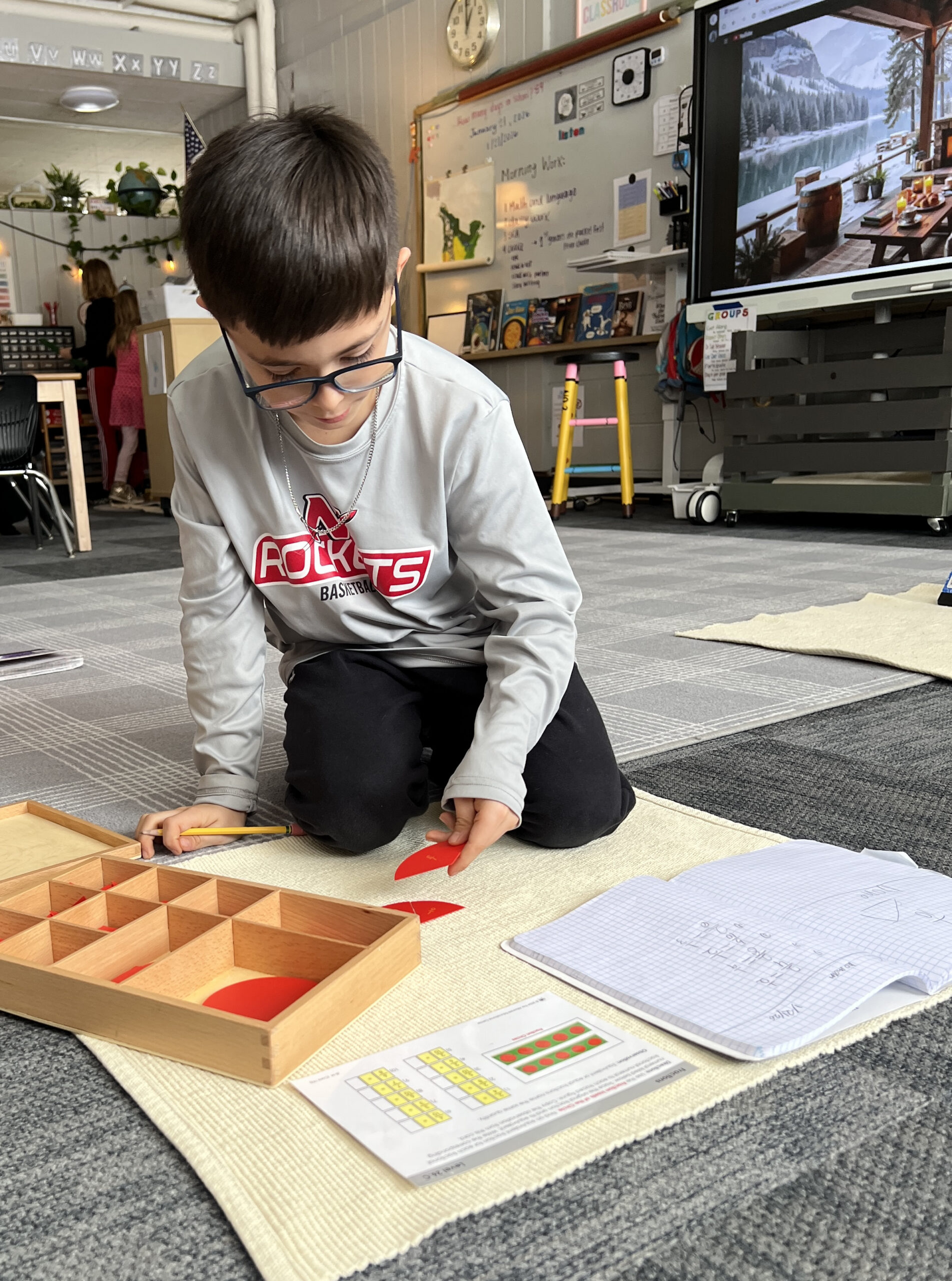 The sole charter school in the Neenah Joint School District, Alliance Charter Elementary School is proud and dedicated to meet the needs of each and every student. Opened in 2014 to 75 students, it has recently grown to bring on more grade levels and moved to its new home (previously Wilson Elementary School) in 2023. The tuition-free public school uses the Montessori method as a guide in its approach to education.
“The educational approach of Alliance Charter Elementary School deeply resonates with Maria Montessori’s educational philosophy, emphasizing the intrinsic potential of each child as a unique learner capable of self-directed growth,” Carrie Naparalla, Principal, explains.
“The philosophy is based on a triad of the environment, child, and teacher as guides, all aspects of the triad working in unison to promote growth and development.
“At its core, this methodology recognizes children not as empty vessels to be filled with knowledge but as active, curious beings with an innate capacity for profound learning and self-discovery. hands-on Montessori materials, and Montessori-trained teachers.
“This self-discovery is self-directed and individualized, allowing each child to grow at their own pace while developing independence, responsibility, and a deep understanding of the curriculum, which is aligned with Wisconsin State Standards.”
Naparalla says a unique classroom setting, multi-age (1st-3rd grade students and 4th6th grade students are housed in the same classrooms) and their teachers “looping,” or having them multiple years in a row, offer a more substantial connection.
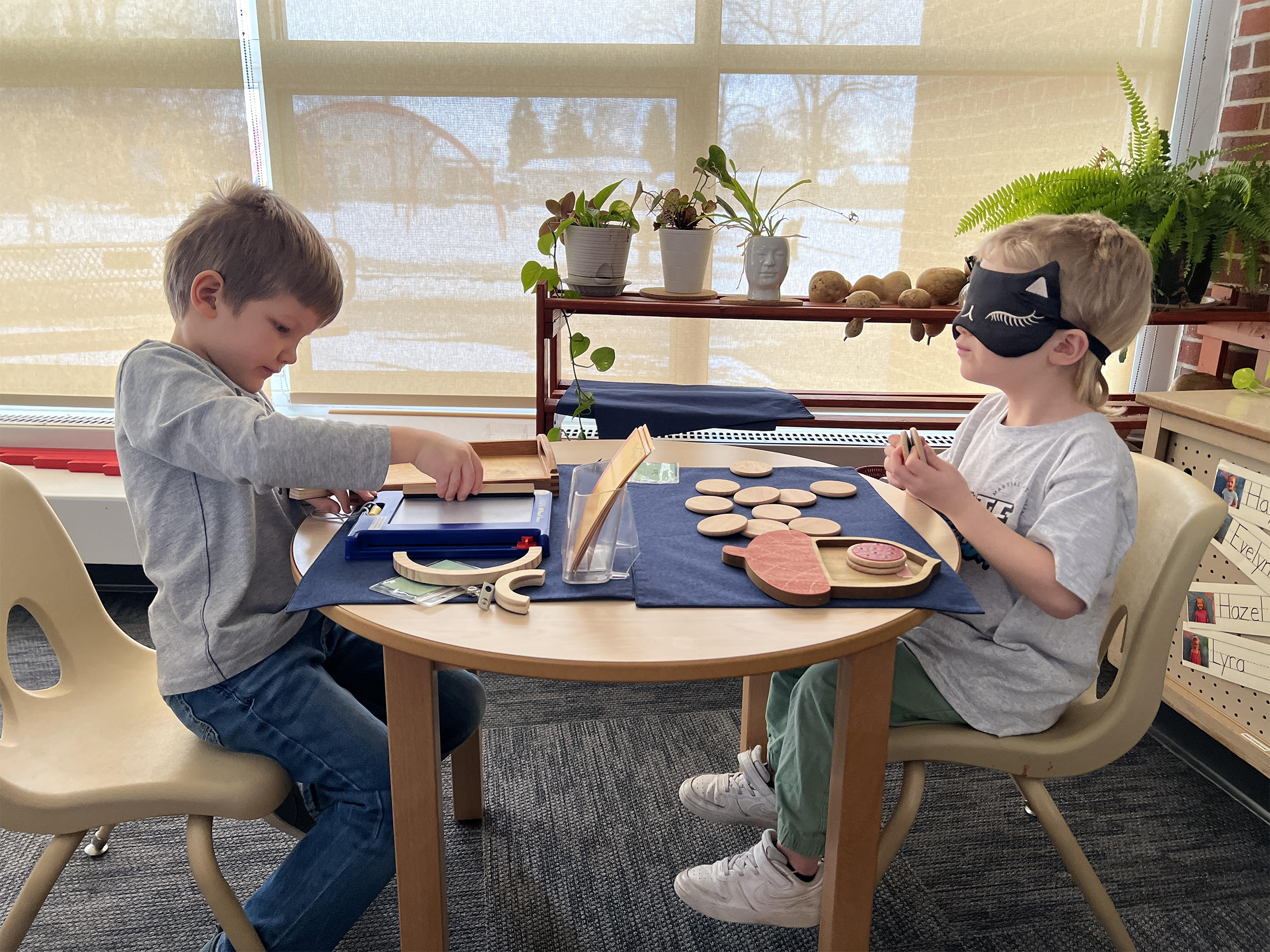 “Since teachers typically have students for 3 years, they get to know them very well and are able to closely monitor their progress through the curriculum. Teachers must have a Wisconsin teaching license as well as Montessori training.”
Enrollment begins by enrolling in the Neenah Joint School District, and then completing an application to enroll at Alliance.
“Each year we welcome approximately 36 4K students but seats are very limited in grades Kindergarten through 6th grade as once a child has a seat at Alliance, they keep that seat unless the caregiver determines they no longer want their child to attend,” Naparalla says.
“If we have applicants for a grade level but there are no seats available, those applicants are placed into a lottery to determine the wait list order.”
Charter schools provide families with access to a different pedagogical approach (Montessori, Project-Based Learning, Virtual to name a few) regardless of their income, allowing diverse types of learners to thrive where they might otherwise struggle. Alliance Charter Elementary School is tuition free and an instrumentality of the Neenah Joint School District.
“Our focus on developing responsible global citizens and independent problem-solvers aims to send empathetic, critical thinkers into the world who are equipped to tackle complex future challenges,” Naparalla says.
Appleton Technical Academy (ATECH), Appleton
9th to 12th Grade
Mission: The Appleton Technical Academy graduates students who possess the knowledge and skills necessary for successful entry into the career pathways of modern advanced manufacturing.
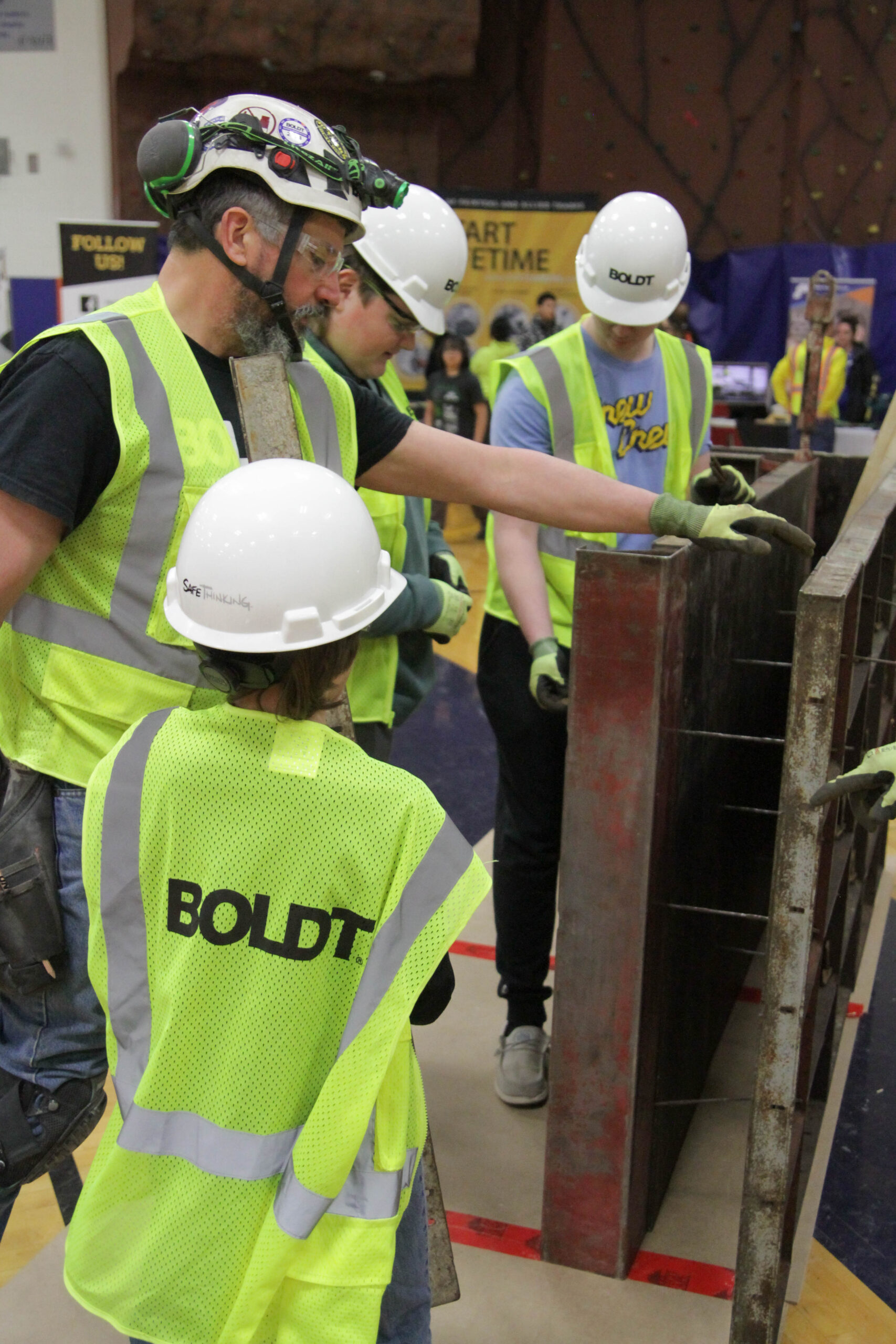 Opened in 2013, Appleton Technical Academy (ATECH) focuses on modern advanced technology, and has grown leaps and bounds, not to mention garnered attention from technology industry leaders across the country.
“Samsung Cares, in cooperation with UTech Learning, started a pilot program here,” Lead Teacher Paul Endter, explains. “We were the first in the nation, the United States of America, to have a tech program specifically designed for appliances, smart home automation and smart home technologies.”
Endter, in his 29th year in education, has been with ATECH since its inception, which he says came about after local businesses expressed a need for a talented workforce.
“The vision was to get kids excited about career pathways,” he explains. “Thirty percent of all of the jobs in Wisconsin are manufacturing. You can have a college education, but you don’t need one in order to be successful in a career in manufacturing.
“There’s a misperception of manufacturing, ‘the Ds’: the dark, the dirty, the dingy. And maybe it’s like that in some places, but the majority of places now, you have robotic cells, you have electronic cells, you have high tech machinery that requires a clean environment.”
Endter references the Plexus facility in Neenah as an example.
“You can literally eat off the floors!” he says. “It is temperature controlled, it is humidity controlled, because they deal with very complex electrical components. And as such, you literally do not enter into the space unless you are wearing a full suit. A lot of people don’t know that places like that exist here locally.”
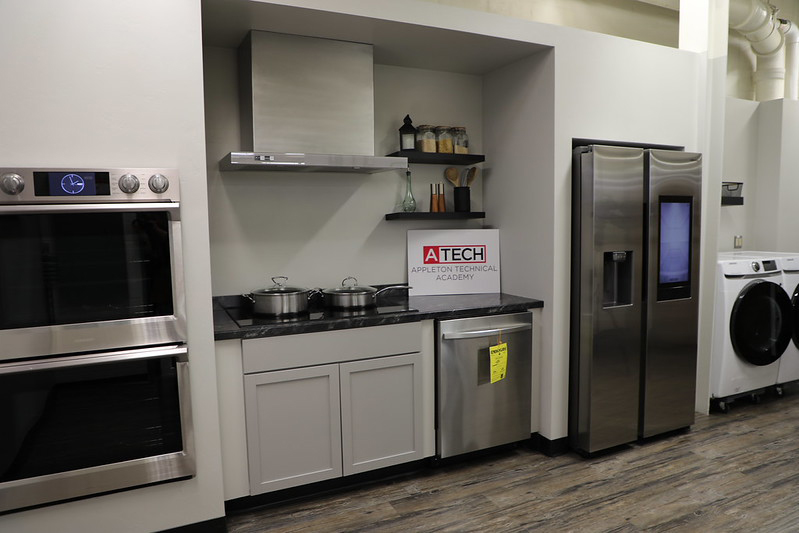 ATECH offers classes for freshmen through seniors, but junior year is when specialized courses are put into play and may actually work toward their future in a tangible way. Courses include weldingmetal fabrication, electro-mechanical seminars, technical drafting, engineering and more.
“All of our programs have some level of credits, a varying number of credits that kids earn for free while they’re here, and then they can go on to Fox Valley Tech to finish that certification. They’re also transferable. We can get the kids a jump start.”
Endter is sure to say he understands the need for four-year degrees, but in Wisconsin, sees the need for specialized training in technology and manufacturing as a priority.
“There are so many people who graduate with an insurmountable debt that they cannot pay back,” he relays. “If we also back the numbers up for that college education, less than 50% of those who have started actually finish a four-year degree.
“A majority of those kids will enroll in tech, and they’ll get specialized training in either a certificate, a technical diploma or an associate’s degree.“
“This is what is going to continue to maintain our local economy, our state economy, and our nationwide economy, because we need people who are the doers, who are the creators, who are the makers.”
ATECH offers two career expos, in the fall and winter – bringing in multiple businesses and hands-on activities for those interested in the modern manufacturing industry.
Fox West Academy, Hortonville
6th to 8th Grade
Mission: At Fox West Academy, we strive to nurture critical thinkers, creative problem-solvers, collaborative team players, and effective communicators. Through the integration of the 4C’s (Critical Thinking, Creativity, Collaboration, and Communication) and the ISTE (International Society for Technology in Education) standards, we prepare students to thrive in an ever-evolving, tech-driven world.
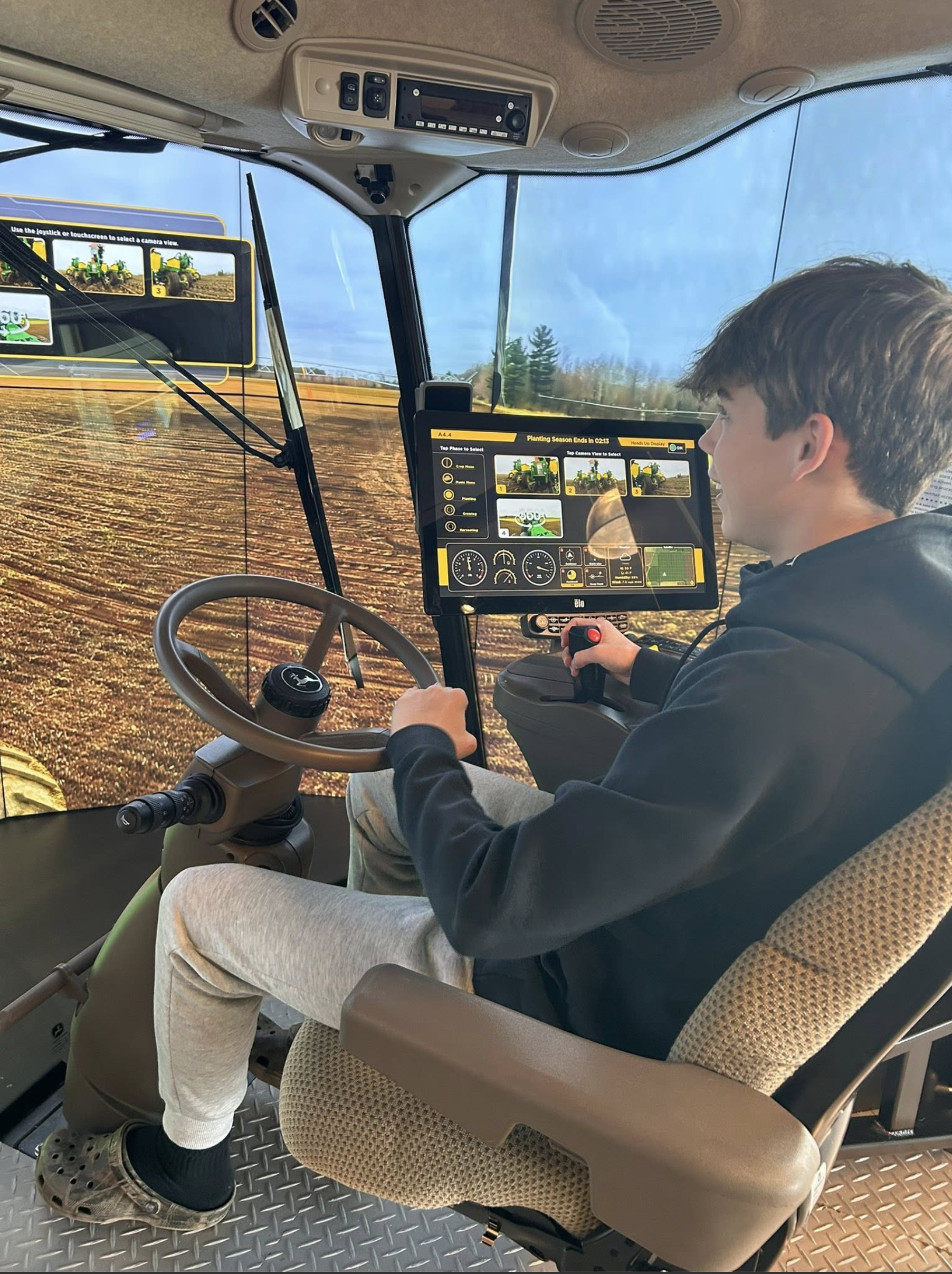 Empowering students to take charge of their learning based on their natural curiosity, Fox West Academy in Hortonville uses hands-on projects to foster students’ creativity and engagement.
“We really use that innovation and curiosity,” Principal Torrie Rochon says. “Teaching kids to be self-reliant, to develop discipline, to develop confidence, to develop compassion.”
Small class sizes of approximately 22 students per grade, and with the same three teachers throughout their education at the middle school lends itself to a close knit group.
“Our teachers are phenomenal at getting to know what each kid needs and creating a program that fits them—whether that means they need more practice being a leader because they’re hesitant or anxious. Teachers get to know every single student intimately. They’re all together and have those same teachers consistently, so it really becomes a family,” Rochon explains.
“Eighth graders can kind of become mentors for the younger grades. It’s an intimate environment and builds a really strong community.”
“There are certain kids who need that, certain families who really treasure that. It’s another key component. It can be really beneficial for a lot of our families who want more of a private school. It’s a public school with a private school atmosphere. It’s the best of both worlds.”
Every 6-9 weeks, students at Fox West Academy begin new projects that encompass core subjects like science and social studies but also incorporate literacy math and a real world component. Rochon says students have the opportunity to partake in numerous field trips that help bring to light what they’re learning.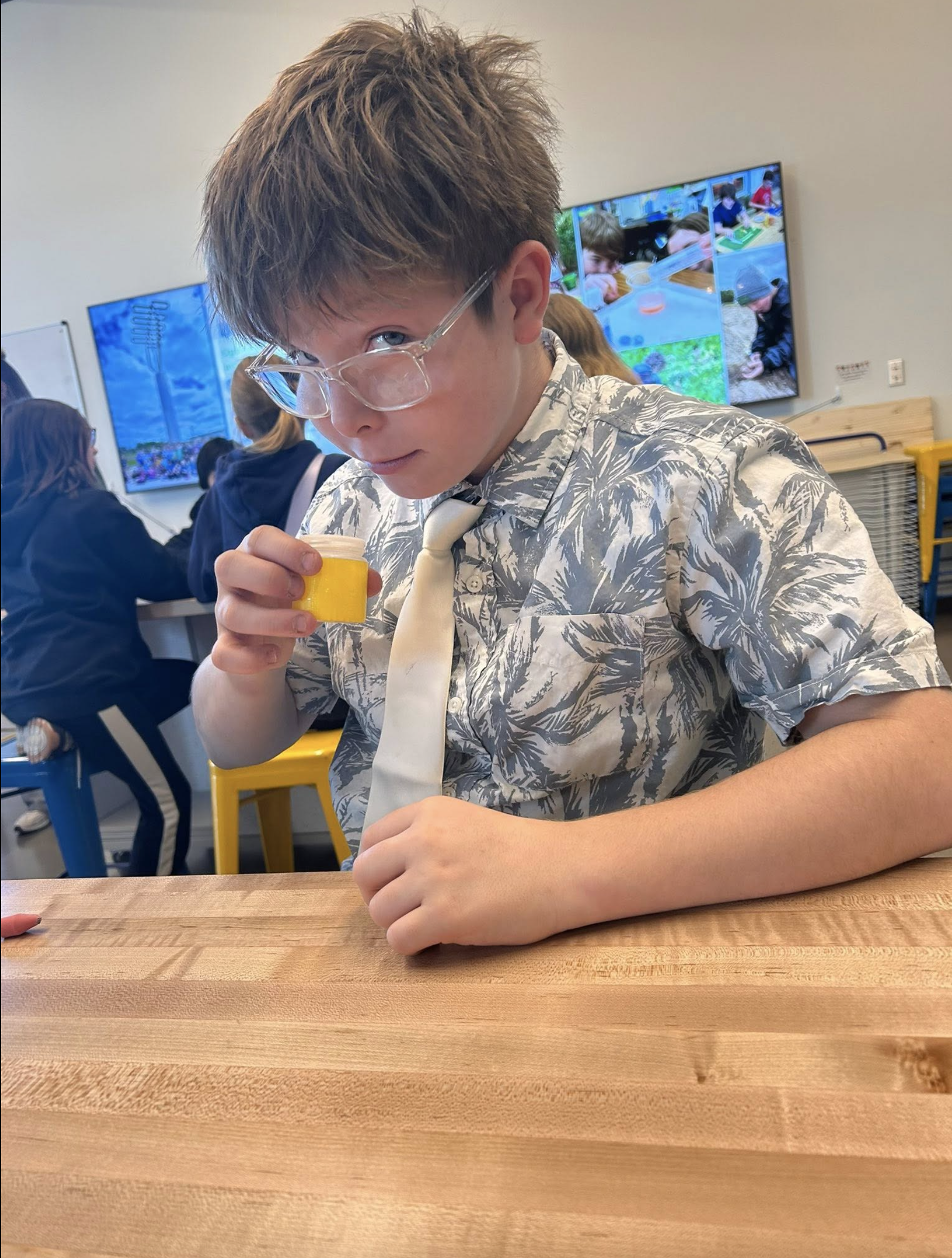
“They’re often out in the community,” she says. “They’ve done sailing, explored Bubolz, worked with Pierce. They’ve been to St. Louis. Our eighth graders are going to Disney World soon to meet with innovators and engineers.
“They also regularly participate in Project Nights that kind of showcase what they’re doing. One of them is like Shark Tank—they create and design something and then pitch their product to sell it. It’s great for public speaking and confidence. We bring in people from our community as the ‘sharks.’”
Guided by ISTE standards, Fox West Academy students join their Hortonville Middle School counterparts for classes like digital literacy, art, Phy-Ed, band, choir, and Health.
Fox West Academy teachers and staff believe education is a shared responsibility, bringing together parents, local businesses and community partners as integral to their mission.
“It’s all about community and building relationships,” Rochon says. “But it’s about celebrating that too. Students work hard during their projects and then have that element of play. It’s working hard toward a thing, a goal… they just went to Urban Air after this quarter.”
Enrollment at the academy is based on a lottery system, and registration is open through the end of April.
Kaleidoscope Academy, Appleton
6th to 8th Grade
Mission: Kaleidoscope Academy strives to engage middle school students in their learning through inquiry based projects and personalized learning using a balance of fine arts and 21st Century Skills.
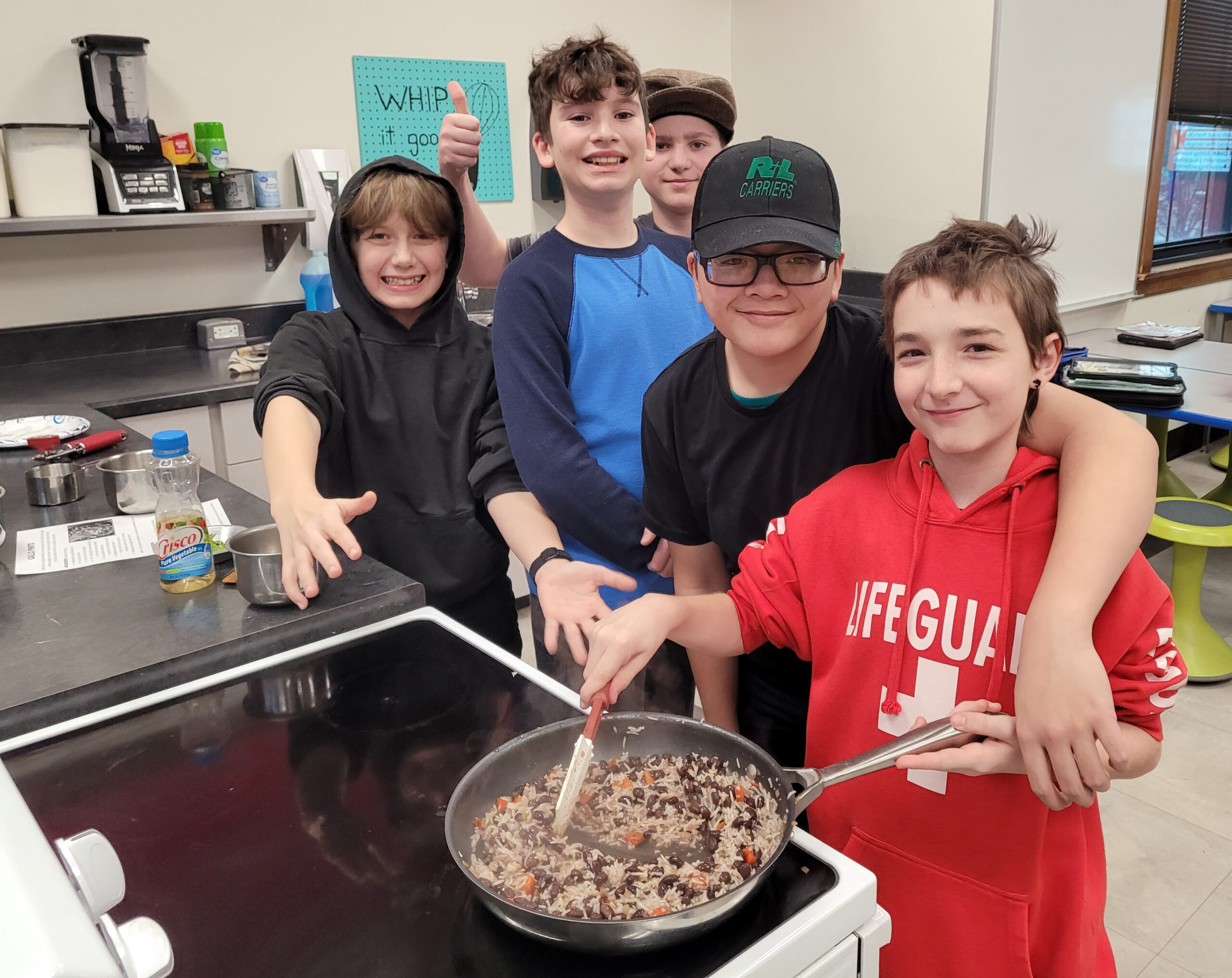 Known for its project-based philosophy and inquiry based learning, Kaleidoscope Academy opened in 2007, but has taken over the historic Roosevelt Junior High building from 1925.
“We really focus on engaging our students a little bit differently,” Principal Alexandra Molitor says. “We believe that kids should not just be sitting back, listening, doing worksheets and tests, but they should be engaging with each other. They should be problem solving, critically thinking. We feel the arts enhance their learning.”
Kaleidoscope Academy integrates focuses like graphic art and design into math, science and other core classes to help deepen students’ understanding of particular lessons.
Those “humanities” courses are transformed to not only pique students’ interest but also understand.
“For example, they might learn about negative and positive integers in math, but also do that with the color scheme, adding white or black to colors to make them lighter and darker. It resonates with them.”
Molitor says the school allows students to choose their elective courses, and the act of doing so helps them take ownership.
“We offer a lot of choice for our students,” she says. “We have a lot of different elective options like dance, music, art theater, family consumer science, world language—there’s a little bit more ownership because the students are choosing their classes. They’re more engaged.”
Social emotional learning is also important to the academy.

“We know that from ages 12 to 14, 15, when they’re here, their brains are going through so much development,” Molitor explains. “We also know if you’re going through social conflict, if you’re feeling stressed, anxious at home or things are going on with friends, you’re not going to be learning at a high level. So there are a lot of things we try to embed in the classroom to just kind of be more mindful: refocus strategies, breathing techniques, things that can be done discreetly.”
Kaleidoscope also has a room called “The Nest” for students who need a safe space to regroup.
“They just need to ask their teacher for a pass and go down for like a 5 to 10 minute break if they actually need to get out. There are calming activities, energizing activities. There are therapy dogs that visit two to three times a week.
“We also have a really good student services team that includes our school counselor, social workers, school psychologist, nurse, dean of students… we’re always tracking data on our students, like, OK, this kid has come down to The Nest 5 times this week, so we may need to do a little check-in and see if there’s something else we can do to support them.”
While academics are key, Molitor says it’s easy to reflect on the other side of middle school through watching students interact with each other.
“The kids are really so great,” she says. “They are so accepting of each other. Everybody just kind of finds their place. We’ve tried to build that culture to express yourself and follow your path.”